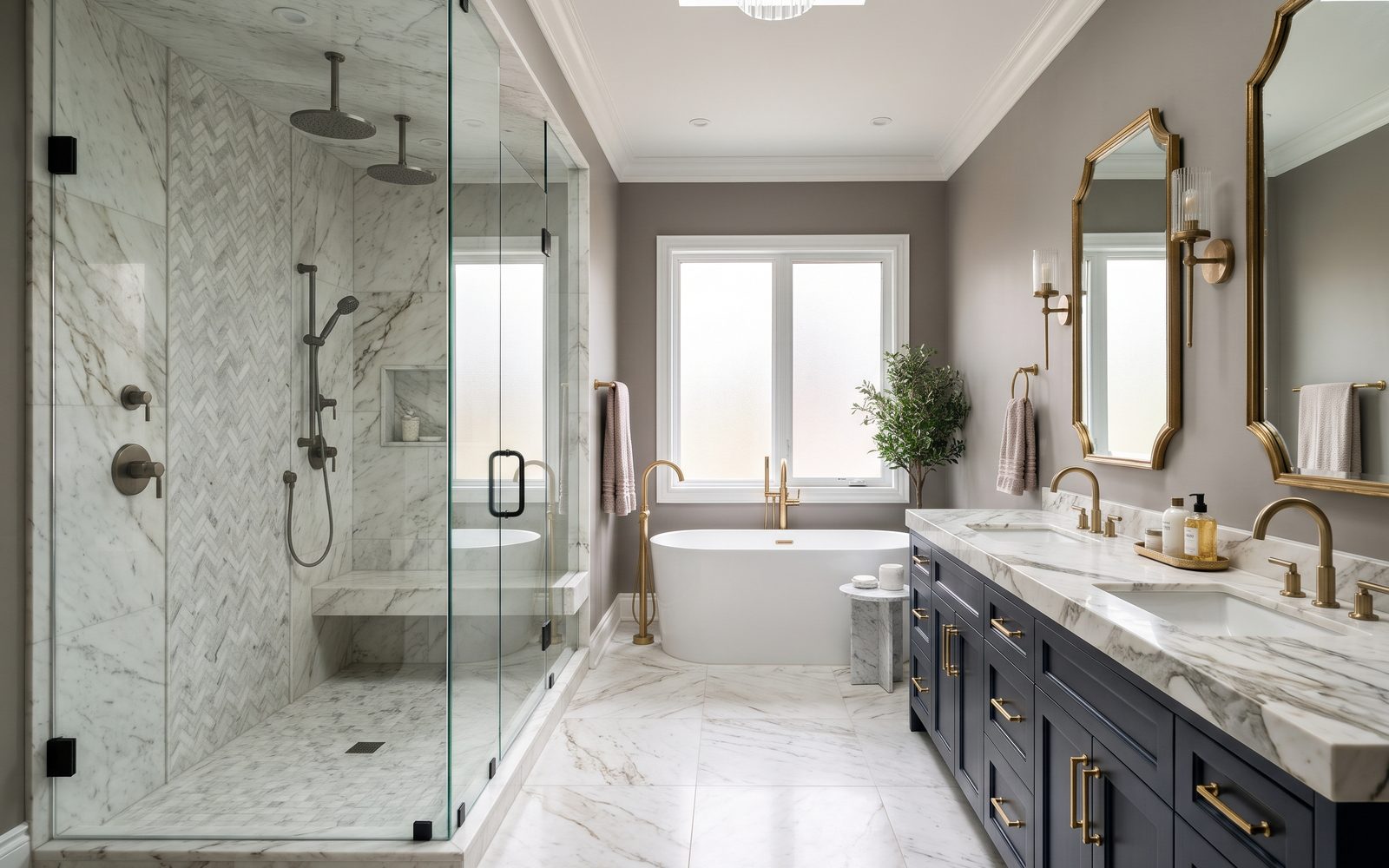
Quick answer: Decide how far you want to go (refresh, update, or full remodel), whether fixtures stay where they are, and your main finishes before you ask for estimates. Those three choices set most of the price and schedule.
A bathroom is one of the smallest rooms in the house and one of the most complicated to remodel. Plumbing, waterproofing, tile, electrical, ventilation, and fixtures all have to come together in a few square feet. The good news is that most of the surprises in a bathroom project come from decisions that weren't made up front. Settle these seven before your first walkthrough and you'll get a tighter estimate and a smoother job.
1. Refresh, update, or full remodel?
Be honest about how far you want to go. A refresh keeps the layout and swaps surfaces: paint, a new vanity, new lighting, maybe new flooring. An update replaces the tub or shower and the tile around it. A full remodel takes the room down to the studs and may move fixtures. Each step up adds trades, time, and cost, so knowing which one you want is the single biggest factor in your estimate.
2. Keep the layout or move fixtures?
Leaving the toilet, sink, and shower drain where they are is the easiest way to control cost. Moving a drain often means opening the floor, and on a slab foundation, which is common across North Texas, that can mean cutting concrete. If the layout truly doesn't work for you, it can be worth it. Just make that call before pricing, not halfway through demolition.
3. Tub, shower, or both?
Tub-to-shower conversions are one of the most popular bathroom projects we see, especially in hall baths where the tub rarely gets used and in homes where someone wants an easier step-in. If it's the only tub in the house and you have young kids or plan to sell soon, keeping one tub somewhere in the home is usually the smart move.
4. Who will use this bathroom in ten years?
If you plan to stay in the home, think about aging in place now. A curbless or low-threshold shower, blocking in the walls for future grab bars, a comfort-height toilet, and better lighting cost far less to add during a remodel than afterward.
5. Choose your finishes before work starts
Tile, vanity, faucet, shower valve, and lighting selections drive both price and schedule. Some items take weeks to arrive. Having your selections made, or at least narrowed down, lets your contractor price real products and order early instead of putting allowances in the estimate and hoping they hold.
6. Don't skip what's behind the walls
The parts you won't see are the parts that matter most:
- Waterproofing behind and under the tile in the shower, not just cement board and grout
- Ventilation sized for the room and vented outside, so moisture doesn't end up in your attic
- Plumbing and electrical brought up to current code where the work touches it, with permits where the city requires them
Ask any contractor you're considering how they handle each of these. A clear answer is a good sign.
7. Plan for life during the project
If this is your only full bathroom, plan where everyone will shower while it's out of service. Ask for a realistic schedule, what days the water will be off, and how dust will be contained. A good contractor will build the schedule around how your household actually works.
The bottom line
The more of these decisions you make before the estimate, the more accurate the price and the fewer change orders you'll see. If you're not sure where to start, a walkthrough is the right first step. We'll look at the space with you, talk through options, and give you a written, itemized estimate. See our bathroom remodeling services.
We plan and build bathroom remodels across DFW, including Denton, Frisco, Plano, McKinney, Dallas, and Fort Worth.
Frequently asked questions
How long does a bathroom remodel take?
A cosmetic refresh can take a few days. A full remodel with new tile, plumbing changes, and a custom shower usually takes several weeks, depending on selections and inspections.
Do I need a permit to remodel a bathroom in DFW?
Often, yes. Most DFW cities require permits when plumbing or electrical work is moved or added. We pull permits with the city where the work requires them.
Can I keep using the house during the remodel?
Usually. Plan for another bathroom to use while this one is out of service, and expect the water to be off for short periods.